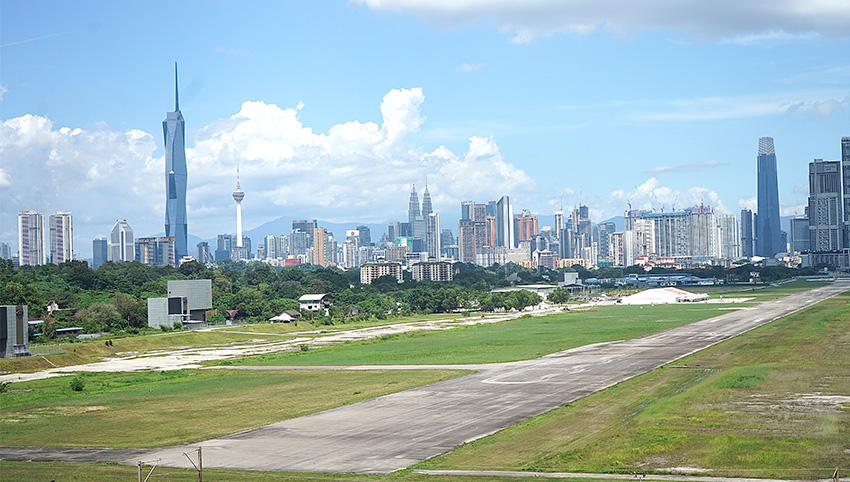
If you don't know Tun Razak Exchange, I'll bet you've heard of something else — the 1MDB scandal.
In May 2011, Prime Minister Najib Razak announced Bandar Malaysia on the site of the old Sungai Besi Air Base. The vision: a world-class integrated city in the heart of Kuala Lumpur. Then the scandal broke, deals collapsed, and the project froze — 486 acres of arguably the most valuable undeveloped land in KL, sitting idle for years.
In 2025, Petronas stepped in. KLCC Holdings took the lead. Redevelopment starts end of this year. Estimated GDV: RM150 billion. Estimated timeline: 50 years to complete.
This isn't a property launch. It's a city being built from scratch.
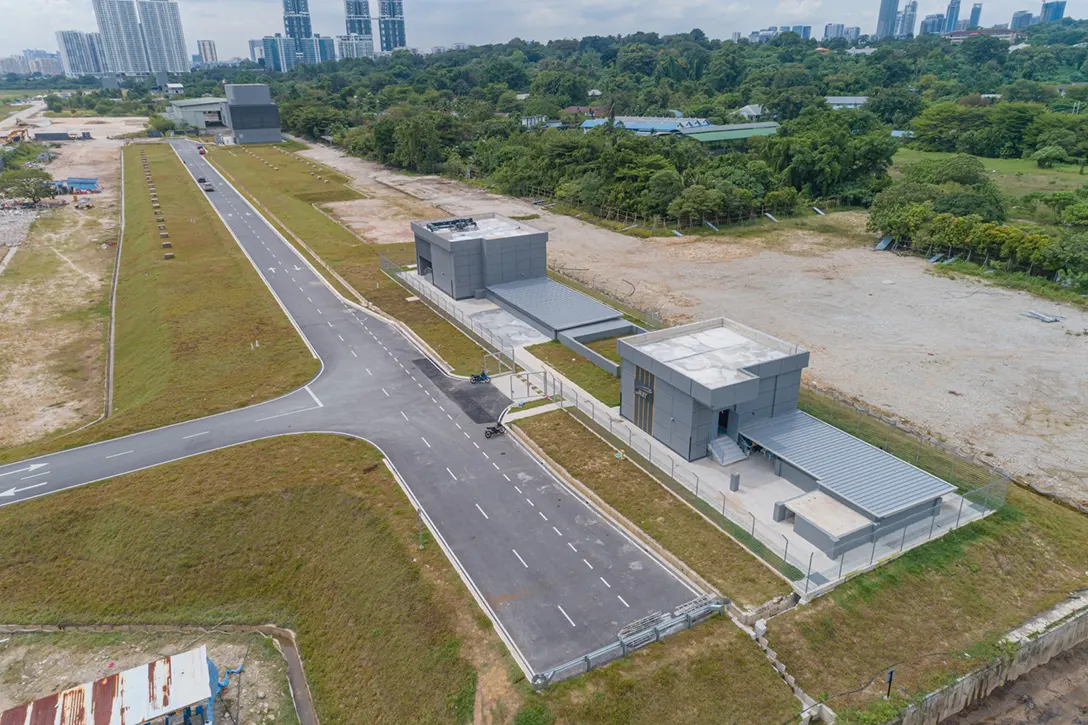
The Bandar Malaysia site today — MRT infrastructure already taking shape on the old airbase
Three things that make this different
350km. 90 minutes. Bandar Malaysia to Jurong East. Currently in active procurement — not confirmed, but closer than it has ever been. If it happens, Bandar Malaysia becomes the northern terminus of the most significant infrastructure project Southeast Asia has seen. The JB–Singapore RTS Link is already confirmed for end-2026. The connectivity story has already started.
Source: MyHSR Corporation →The masterplan incorporates smart city elements including AI integration, sustainability, and pedestrian and transit-friendly design. Think what Johor is currently piloting with AI-integrated surveillance and urban management — Bandar Malaysia is being designed with this from the ground up, not retrofitted.
Source: The Straits Times →Two MRT Putrajaya Line stations — Bandar Malaysia Utara and Bandar Malaysia Selatan — are already planned for the site. The infrastructure foundation is being laid before the buildings even go up. That's the difference between a project and a city.
Source: KLIA2.info →Why this matters
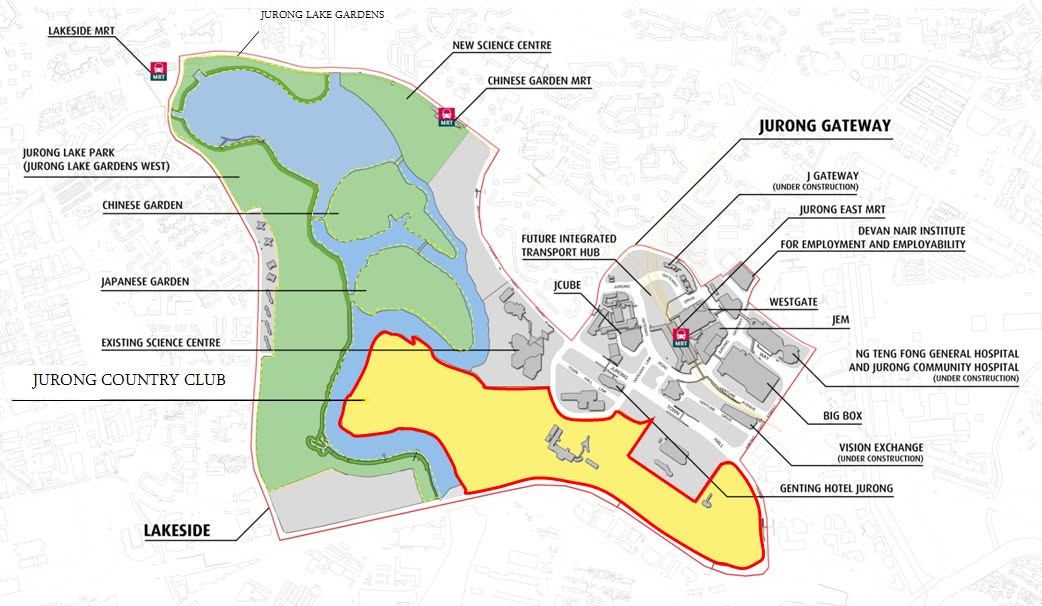
Jurong East, Singapore — the confirmed southern terminus for the KL–Singapore HSR. The yellow area marks the reserved land for the integrated transport hub and HSR station, adjacent to Jurong East MRT.
Empty land doesn't stay empty. People fill it — and Bandar Malaysia won't attract just any crowd. It will pull in businesses ready to build something new, professionals who want to be part of something early, families planting roots in a place that hasn't fully formed yet.
If the HSR delivers, the distance between KL and Singapore doesn't just shrink — it collapses. Business done in the morning, home by dinner. Singaporeans choosing KL for space and affordability. Capital and talent following the infrastructure south.
Over time, this stops being a Malaysian story. It becomes a regional one.
My honest forecast
The question isn't whether Bandar Malaysia will be impressive. Petronas doesn't build ugly things. The question is whether it becomes Marina Bay or Putrajaya — and that answer depends almost entirely on whether the HSR gets built.
But corridors have two ends
Everything is pointing southeast — TRX, Cochrane, Bandar Malaysia, Johor. The momentum is real. The infrastructure investment is following.
So what happens to the markets that don't sit on this line? Suburban Klang Valley. Johor — where the Singapore-proximity story has been told for a decade, but the numbers don't always match the narrative.
Thinking about your next property move?
Whether it's Bandar Malaysia, Jalan Cochrane, or something else — the right decision starts with knowing what you expect the property to bring you. Let's talk.
Get in touch →